How AI Helps Small Businesses Create Direct Response Campaigns That Convert
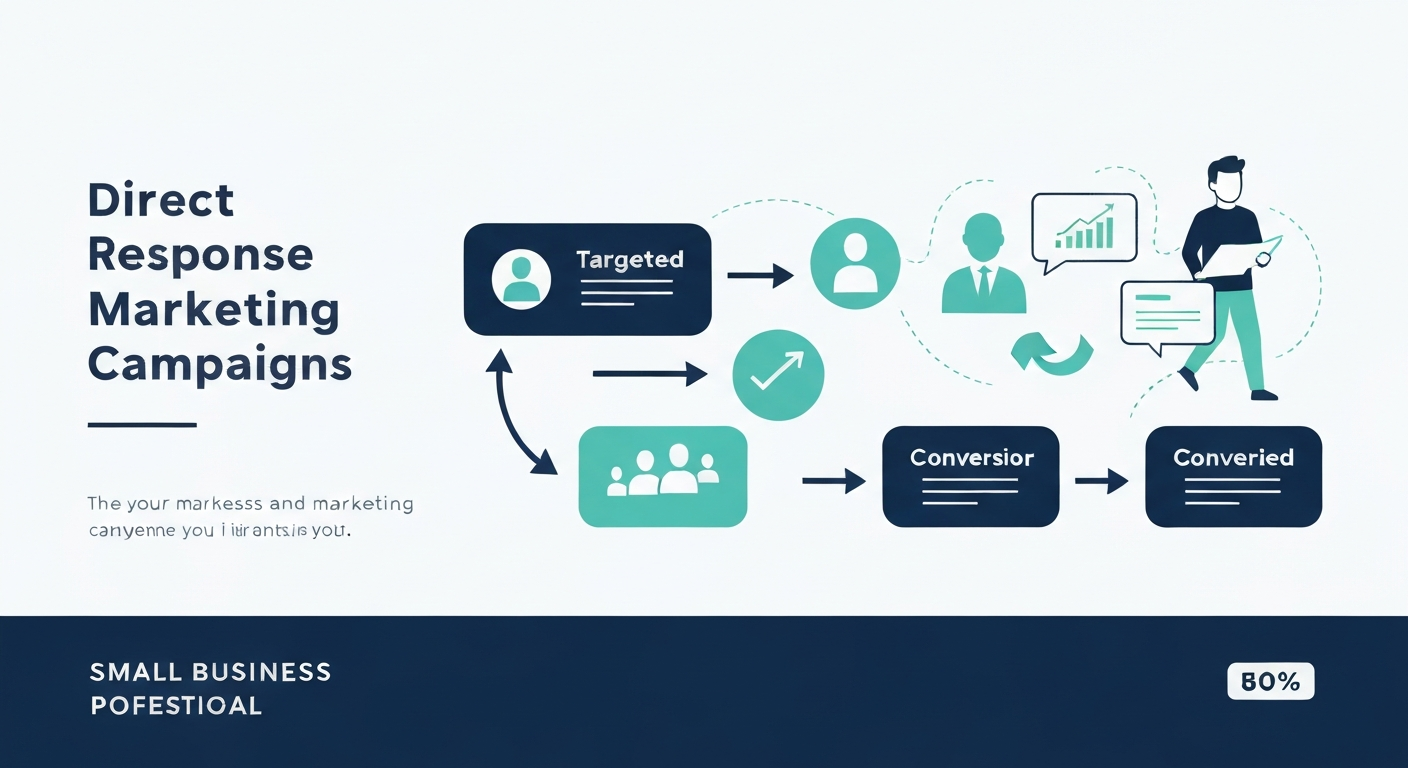
Direct response marketing is not about being loud. It is about giving the right person a clear reason to take the next step — then making sure your business follows up fast.
Highlights / TLDR
- Direct response campaigns are built around one clear action, such as calling, booking, requesting a quote, or filling out a form.
- AI can help small businesses create better campaign briefs, landing pages, offers, calls to action, and follow-up messages.
- The campaign does not stop when someone clicks; lead capture and fast follow-up matter just as much.
- AI works best when it supports clear strategy, strong offers, human review, and practical automation.
- SourceOne helps small businesses build campaigns that connect messaging, landing pages, CRM, follow-up, and tracking.
Most small business owners have tried some version of a marketing campaign.
A social post promoting a service. An email about a seasonal offer. A landing page for a special. A paid ad to drive calls. A postcard, flyer, newsletter, or local promotion.
The problem is not that these ideas are bad. The problem is that many campaigns are built as one-time marketing pushes instead of complete response systems.
A campaign gets attention, but the landing page is weak. A lead fills out a form, but no one follows up quickly. A prospect clicks an email, but the next step is unclear. A business runs an ad, but the team cannot tell which leads came from it.
A customer asks a question after hours and hears nothing until the next day.
That is where direct response marketing matters.
A direct response campaign is designed to get a specific action from a specific audience. It asks the reader, viewer, or visitor to do something now: call, text, book, request a quote, claim an offer, schedule a consultation, download a resource, or start a conversation.
AI can help small businesses create better direct response campaigns by improving offer clarity, drafting audience-specific messaging, planning landing pages, creating follow-up workflows, responding to missed calls, and tracking what actually happened after the campaign launched.
The goal is not more marketing noise.
The goal is a clearer path from interest to action.
At SourceOne Technologies, we help small service businesses use AI and automation in practical ways. That means building campaign systems that capture leads, respond faster, follow up consistently, and help the owner see what is working.
AI made practical for real businesses.
That is the goal.
Why Direct Response Still Matters
Direct response marketing is useful because it gives a campaign a job.
Brand awareness has its place. Staying visible matters. Educational content matters. But when a small business needs calls, booked appointments, quote requests, or lead form submissions, the campaign needs a clear response path.
That means the business should know what the campaign is asking people to do.
For example, a direct response campaign might ask people to:
- Request a quote
- Book an appointment
- Call for same-day availability
- Text a question
- Fill out a short form
- Schedule a consultation
- Claim a seasonal offer
- Ask about a service
- Join a follow-up list
The clearer the action, the easier it is to build the rest of the campaign around it.
Small businesses do not have time to run campaigns that only "get the word out" without a next step. A campaign should help the business capture interest, understand the lead, and follow up before the prospect moves on.
That last part matters.
Harvard Business Review reported that companies that contacted online leads within one hour were nearly seven times as likely to qualify the lead as companies that waited an extra hour, and more than 60 times as likely as companies that waited 24 hours or longer. The study also found that many companies either responded slowly or did not respond at all.
Source: HBR: The Short Life of Online Sales Leads
That is exactly why campaign strategy and follow-up need to be connected.
A strong campaign can still fail if the response system is weak.
What Changes When AI Is Added to Direct Response
AI does not make direct response marketing work by itself.
It helps organize the work.
That is an important difference.
A small business still needs a clear audience, a specific offer, a useful landing page, a strong call to action, and a follow-up process. AI can help draft, test, adapt, and improve those pieces faster.
For a service business, AI can help with:
- Campaign planning
- Audience-specific messaging
- Landing page outlines
- Offer ideas
- Headline options
- Email and SMS follow-up
- Missed-call response
- Form questions
- CRM tagging
- FAQ content
- Ad copy drafts
- CTA testing ideas
- Conversion tracking plans
But AI should not turn a campaign into generic sales copy.
The campaign still needs to sound like the business. It needs to reflect real customer questions, real service details, real locations, and real next steps.
That is where many small businesses get stuck. They can create a post or an ad, but they do not connect the offer, landing page, form, CRM, follow-up, and reporting into one working system.
SourceOne helps with that connection.
We build systems, not just campaigns.
1. Start With One Clear Campaign Goal
Every direct response campaign should start with one clear goal.
Not five goals.
One.
Do you want the prospect to call? Book? Request a quote? Fill out a form? Ask a question? Schedule a consultation? Join a list? Claim an offer?
When the goal is vague, the campaign gets vague. The headline tries to do too much. The landing page gets crowded. The CTA becomes weak. The follow-up path is unclear.
AI can help refine the campaign goal by asking practical questions:
- Who is this campaign for?
- What problem are they trying to solve?
- What action do we want them to take?
- How urgent is the need?
- What information do they need before acting?
- What happens after they respond?
- How will we track the result?
For example, "promote our HVAC services" is too broad.
"Get Denver homeowners to schedule AC repair before peak summer demand" is better.
That goal gives the campaign direction. It tells us who the message is for, what service matters, what timing matters, and what action we want.
A campaign with one clear goal is easier to write, easier to build, and easier to measure.
2. Build the Offer Around a Real Customer Need
A direct response campaign needs a reason for people to act.
That does not always mean a discount.
A strong offer can be a limited appointment window, a seasonal service reminder, a free conversation, a helpful assessment, a fast response promise, a consultation, a bundled service, or a clear next-step invitation.
The best offer matches what the customer already cares about.
A homeowner with a leaking pipe wants fast help. A med spa prospect may want to understand treatment options. A contractor lead may want to know what the process looks like. A business owner may want to know how much time a system could save.
AI can help brainstorm offer angles based on customer problems, service type, seasonality, location, and buying stage.
For example:
- "Schedule your AC check before the first heat wave."
- "Get help deciding whether repair or replacement makes sense."
- "Ask us what your website may be missing."
- "Talk through your lead follow-up gaps."
- "Find out why your campaign is getting clicks but not leads."
The offer should feel useful, not gimmicky.
Small business owners do not need trick-based marketing. They need clear, relevant offers that make it easy for the right person to take the next step.
3. Use AI to Create a Better Campaign Brief
A campaign brief is the plan behind the campaign.
It does not have to be long. It just needs to answer the right questions before the business starts writing copy or building pages.
AI can help create a practical campaign brief that includes:
- Target audience
- Main problem
- Offer
- Primary CTA
- Landing page sections
- Proof points
- Objections to address
- Follow-up messages
- CRM tags
- Tracking needs
- Campaign channels
This helps small businesses avoid starting from a blank page.
For example, a campaign brief for a dental office might identify the target audience as new patients looking for family dental care in a specific area. The main problem might be finding a trusted provider who makes scheduling easy. The CTA might be "Request a New Patient Appointment."
From there, AI can help draft landing page sections, email follow-up, social posts, FAQs, and reminder messages.
The business still reviews everything.
AI helps organize the thinking so the campaign has a stronger foundation.
That saves time and reduces guesswork.
4. Create a Landing Page That Matches the Campaign
A direct response campaign should not always send people to the homepage.
The homepage is usually too broad.
If someone clicks an ad, email, or post about a specific service, the landing page should match that message. It should confirm they are in the right place, explain the offer, answer common questions, show trust signals, and make the next step easy.
A good landing page should answer:
- What is this about?
- Who is it for?
- What problem does it solve?
- Why should I trust this business?
- What happens after I respond?
- How do I take the next step?
AI can help plan landing page structure, draft first versions, suggest FAQs, create headline options, and identify places where the page may be unclear.
But the page still needs real proof.
That might include reviews, service details, photos, local context, years of experience, team information, before-and-after examples, or clear process steps.
A landing page should not just look good.
It should make action easier.
For small businesses, that usually means a short form, visible phone number, clear CTA, simple explanation, and fast follow-up behind the scenes.
5. Write Messages for the Audience, Not Everyone
Direct response campaigns work better when they speak to a specific audience.
The message for a new lead should not be the same as the message for a past customer. The message for an urgent service need should not be the same as the message for someone comparing options.
AI can help create audience-specific versions of campaign copy.
For example, one campaign might need different messages for:
- New website visitors
- Past customers
- Cold leads
- Quote requests
- Referral leads
- Local homeowners
- Commercial prospects
- People who clicked but did not book
- People who booked once but have not returned
This does not mean creating complicated campaigns for every possible person.
It means using simple context to make the message more relevant.
A past customer might get: "It may be time to schedule your seasonal service."
A new lead might get: "Have questions before you book? Tell us what you need help with."
A quote request might get: "Still thinking this over? We can walk through your options."
That is practical personalization.
It helps the business sound more attentive without making the communication feel robotic.
6. Make the CTA Specific and Easy to Act On
The call to action is one of the most important parts of a direct response campaign.
Generic CTAs often fall flat because they do not tell the prospect what will happen next.
"Learn More" is vague.
"Contact Us" can work, but it may not always be strong enough.
A better CTA tells the visitor what action to take and why it makes sense.
Examples:
- "Request a Quote"
- "Schedule Your AC Repair"
- "Ask About Your Project"
- "Talk Through Your Options"
- "Check Availability"
- "Get Help With Follow-Up"
- "Tell Us What You Need"
AI can help create CTA options based on the audience, offer, and page intent.
The CTA should also match the level of commitment.
If the reader is early in the decision process, "Talk Through Your Options" may feel better than "Buy Now." If the reader has an urgent need, "Call for Same-Day Help" may be more useful.
Small businesses should not make visitors work to figure out the next step.
The CTA should be clear enough for a busy person to act in seconds.
7. Connect Lead Capture to Instant Response
A campaign is only as strong as what happens after someone responds.
If a lead fills out a form and hears nothing for hours, the campaign loses momentum. If someone calls and gets voicemail with no fast reply, they may contact another business. If a text message sits unread, the opportunity can go cold.
This is where AI and automation can help small businesses never miss another lead.
A campaign response system might include:
- Missed-call text back
- Instant form reply
- Internal team notification
- CRM contact creation
- Lead source tracking
- Service-interest tags
- Follow-up reminders
- Appointment request workflow
- Quote follow-up sequence
Google Analytics also supports event tracking for website actions, which helps businesses measure key interactions such as form submissions, clicks, or other actions tied to campaign goals. Google's documentation explains that events can be set up on a website using Google tag or Google Tag Manager.
Source: Google Analytics Event Tracking
That tracking matters because campaign success should be measured by more than clicks.
Did the lead come in?
Did the team respond?
Did the person book?
Did follow-up happen?
Did the campaign create revenue opportunity?
Those are the questions small businesses need answered.
8. Use Email and SMS Follow-Up to Keep Leads Moving
Most leads do not become customers from one touch.
Someone may need a reminder. They may need a question answered. They may want to compare options. They may get busy. They may need to talk to a spouse, manager, or team member.
Follow-up helps keep the conversation alive.
AI can help draft email and SMS follow-up based on the campaign, offer, and customer stage. Automation can send the first message, create reminders, and notify the team when someone replies or clicks.
A simple campaign follow-up path might include:
- Immediate confirmation message
- Helpful next-step email
- Reminder after one day
- Follow-up after three days
- Final check-in after one week
- Longer-term nurture if they do not book
The tone should stay helpful.
A good follow-up sounds like:
"Just checking in to see if you still need help with this."
Not:
"You have failed to complete your purchase."
The goal is to stay present without pressuring the prospect.
For small businesses, this is one of the biggest wins. The campaign no longer depends on someone remembering every follow-up task by hand.
9. Track Conversions, Not Just Activity
Many campaigns look active but do not tell the business what happened.
There were clicks.
There were views.
There were opens.
There were impressions.
That is useful, but it is not the full story.
A small business also needs to know:
- How many leads came in?
- Which channel produced them?
- Which landing page worked?
- Which CTA got action?
- How fast did we respond?
- How many leads booked?
- How many quotes were sent?
- How many quotes were followed up?
- Which leads became customers?
- What should we improve next time?
Google Analytics describes key events as important events that businesses can use to measure actions that matter, and those key events can be used to create conversions in Google Ads.
Source: Google Analytics Key Events
This matters because direct response campaigns should improve over time.
AI can help summarize campaign performance, identify patterns, compare message angles, and suggest what to test next. It can help small businesses move from "Did that campaign work?" to "Here is what happened, and here is what we should adjust."
That is how campaigns get better.
Not by guessing.
By tracking what matters.
What This Looks Like in Practice
Imagine a Denver roofing company after a major hailstorm.
The team knows homeowners are worried, but they are also overwhelmed. Some are wondering whether the damage is serious. Some are unsure whether to call insurance. Some are comparing local roofers. Some are ready to schedule an inspection.
A weak campaign might say, "Call us for roofing services."
A stronger direct response campaign starts with a clearer offer:
"Worried about hail damage? Talk with us before you file a claim."
The campaign could include a landing page that explains common signs of hail damage, what homeowners should check safely from the ground, when to call a professional, and what happens during an inspection. The page would include reviews, local service context, photos if available, and a clear CTA to contact the business.
AI could help draft the campaign brief, landing page outline, email follow-up, SMS messages, ad variations, and FAQ section. Automation could send an instant reply when someone fills out the form, notify the team, tag the lead as "hail damage inquiry," and trigger follow-up if they do not schedule.
The campaign does not stop at the click.
It keeps the lead moving.
That same approach can work for HVAC companies, plumbers, med spas, dentists, contractors, landscapers, attorneys, accountants, auto repair shops, salons, coaches, and other service businesses.
The details change, but the pattern stays the same: clear offer, focused landing page, simple CTA, fast response, useful follow-up, and tracking.
The SourceOne Approach: Build the Response System Behind the Campaign
At SourceOne Technologies, we do not look at direct response campaigns as one-off marketing pushes. We look at them as connected systems.
A campaign should connect the message, landing page, form, CRM, follow-up, and reporting.
That is where AI and automation can create real value for small businesses.
We help business owners identify the campaign goal, shape the offer, create the message, build the response path, and connect the follow-up. We also help keep the focus on the metrics that matter: leads captured, calls answered, appointments booked, quotes followed up, and time saved.
The campaign should not leave the owner wondering what happened.
It should create a clearer path from prospect interest to business opportunity.
That is your business running smarter.
We build it. We run it. You grow.
What Gets in the Way
Direct response campaigns fail when pieces are disconnected.
The first problem is a vague offer. If the audience does not understand why they should act, they usually will not.
The second problem is sending traffic to the wrong page. A campaign about one service should not dump people on a homepage and make them search.
The third problem is weak follow-up. A lead who responds to a campaign should not wait hours or days for a reply.
The fourth problem is generic messaging. AI can draft fast, but fast does not mean useful. The message still needs to match the audience, service, and offer.
The fifth problem is poor tracking. If the business cannot see what happened after the campaign ran, it cannot improve the next one.
The fix is practical.
Choose one goal.
Create one clear offer.
Build the page around that offer.
Capture the lead.
Respond fast.
Follow up.
Track the result.
That is how direct response becomes a system instead of another marketing task.
Frequently Asked Questions
What is a direct response campaign?
A direct response campaign is built to get a specific action from a specific audience. That action might be calling, booking, filling out a form, requesting a quote, scheduling a consultation, or asking a question. The campaign should have a clear offer, CTA, landing page, follow-up path, and tracking.
How can AI help create direct response campaigns?
AI can help with campaign briefs, audience-specific messaging, landing page outlines, CTA ideas, email and SMS follow-up, FAQ content, missed-call response, CRM tags, and conversion tracking plans. AI works best when it supports a clear strategy and is reviewed by people who know the business.
What makes a direct response campaign work?
The campaign needs one clear goal, a relevant offer, a focused landing page, a simple CTA, fast lead response, useful follow-up, and tracking. If any of those pieces are missing, the campaign may get attention but still fail to create real business opportunity.
Should every campaign use a landing page?
Not every campaign needs a separate landing page, but many direct response campaigns work better with one. A landing page keeps the message focused on the offer and action. It can answer key questions, show proof, capture leads, and trigger follow-up more clearly than a general homepage.
Why work with SourceOne on AI-powered campaigns?
SourceOne helps small businesses build the system behind the campaign. We connect strategy, messaging, landing pages, forms, CRM, follow-up, and tracking so campaigns support real growth instead of becoming one more disconnected marketing task.
Want to see where AI could save time, improve follow-up, and help your business grow?
Book an AI Growth & Automation Audit with SourceOne Technologies.
Related Resources
How AI-Powered Marketing Helps Small Businesses Grow Without Adding More Work
Learn how AI-powered marketing helps small businesses save time, capture more leads, improve follow-up, and build smarter systems with SourceOne Technologies.
Why Every Small Business Needs an AI Marketing System Now
Small businesses do not need more random marketing tasks. They need AI-powered systems that help capture leads, improve follow-up, save time, and support smarter growth.
